BenPed blister plasters
BenPed blister plasters are anatomically shaped hydrocolloid dressings intended to protect irritated skin and blisters caused by friction and pressure. BenPed links the range to its Microcoll® hydrocolloid technology.
What does a blister plaster do?
A hydrocolloid dressing can shield the area from further friction, cushion pressure and absorb wound fluid. In contact with fluid, a gel-like layer can form. This is different from simply “drying out” a blister.
Larger or smaller shape?
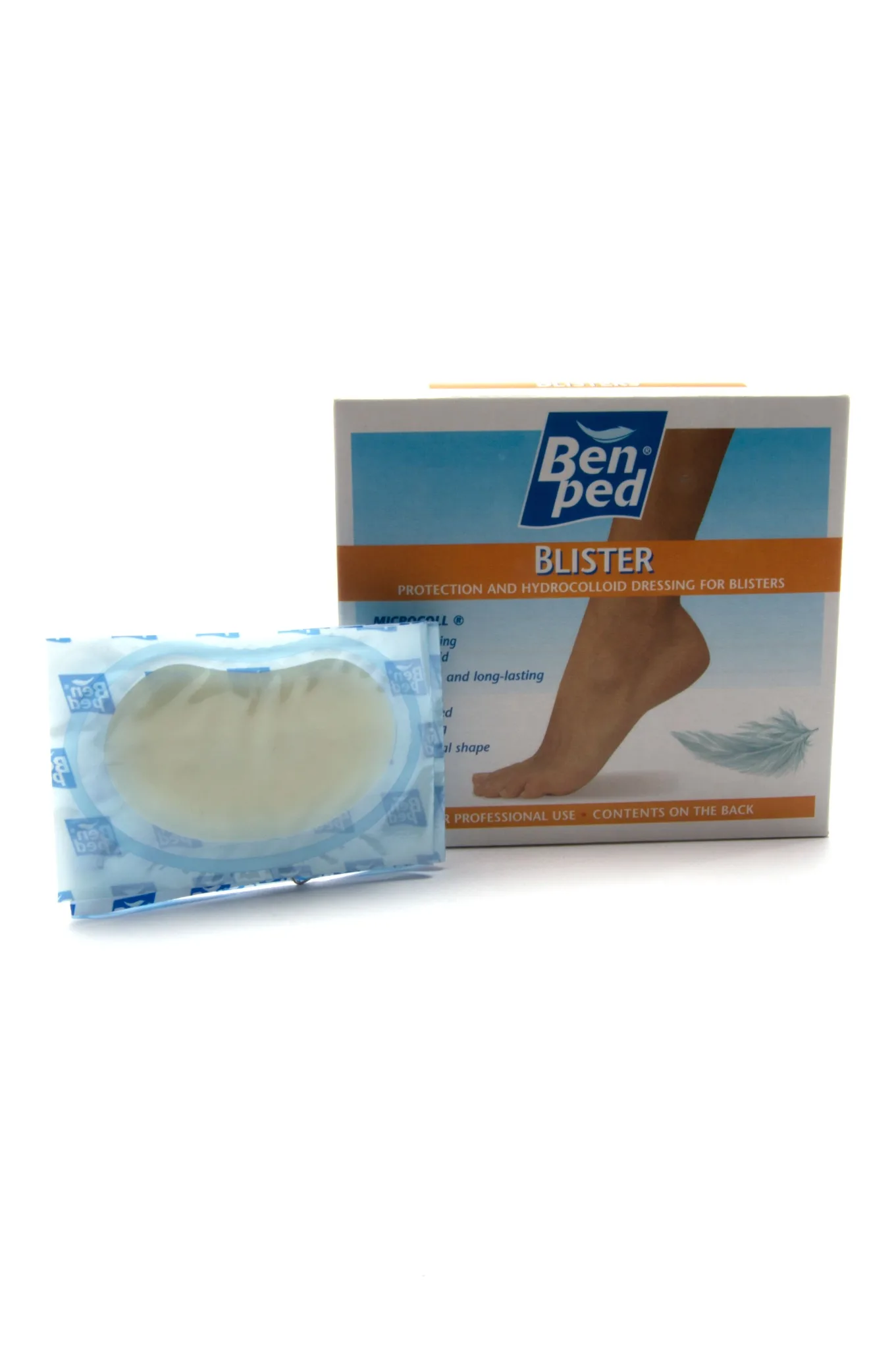
Larger anatomical shape
Useful for broader friction zones, often around the heel. The correct choice depends on the actual location and size of the blister.
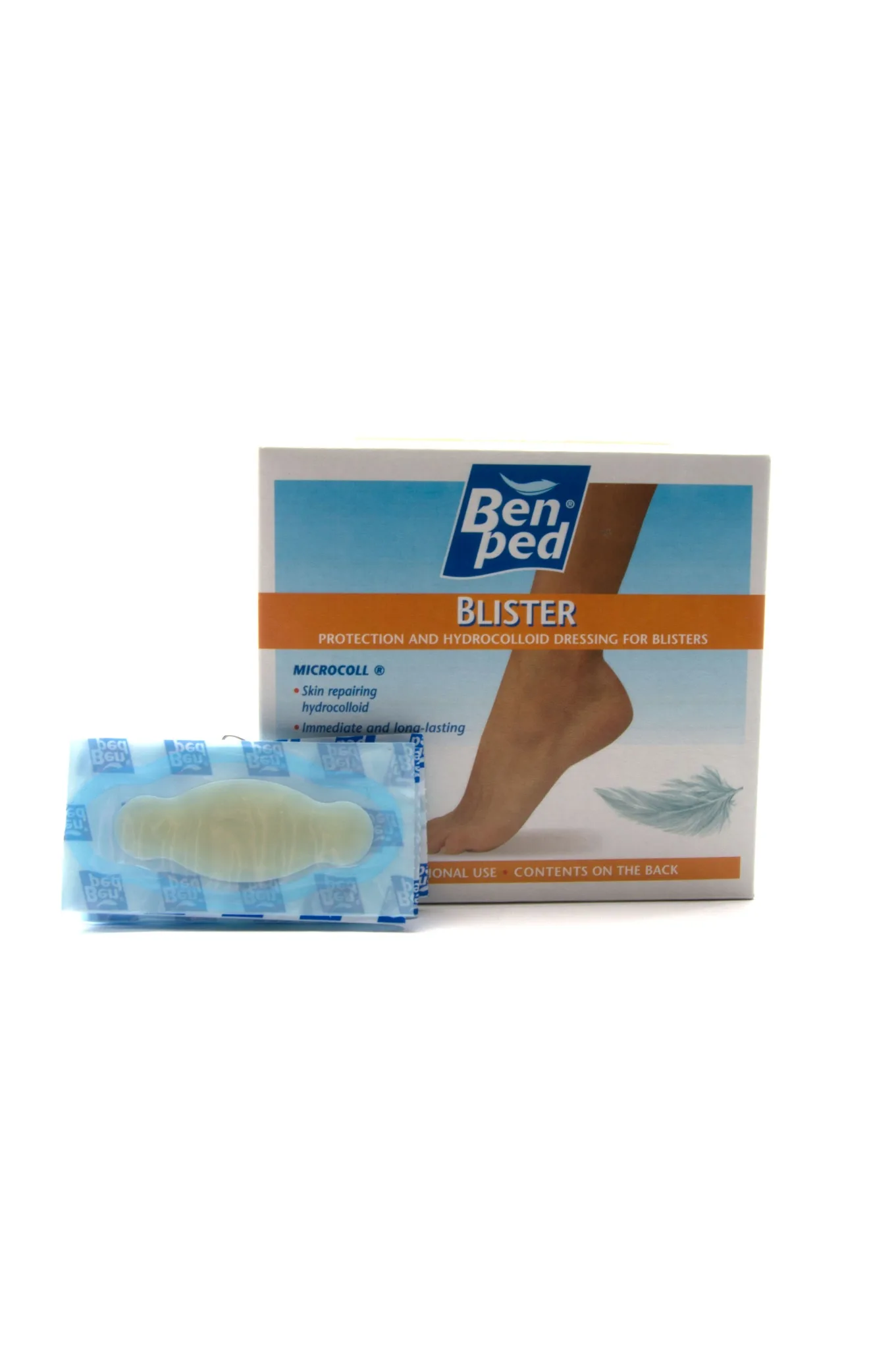
Smaller anatomical shape
Practical for smaller pressure and friction points, for example on or around toes.
What to avoid
- Do not apply to dirty or wet skin.
- Do not assume every red or painful area is a simple friction blister.
- Reduce activity if pain, redness or swelling clearly increases.
Technical terms in plain language
- Hydrocolloid
- A material that can absorb wound fluid and form a soft gel.
- Exudate
- Fluid released by damaged skin or a wound.
- Epidermis
- The outermost layer of the skin.
- Hotspot
- A warm, tender or reddened friction area where a blister may develop.
Get a blister or wound assessed if there are clear signs of infection, increasing redness or heat, pus, fever, severe pain, poor circulation, or if you have diabetes, neuropathy or an increased wound-healing risk. Always follow the current product packaging and manufacturer instructions.
Source basis: current BenPed / Sixtem Life information and current Sixtus Italia product listings, supplemented with conservative practical wound-care guidance. Packaging and current manufacturer documentation take priority if information changes.